

Zaramella C., Pilutti Namer M., Bordi G. A. 2025, The Church of San Fantin in Venice: digital modeling, archival research, and the reuse of ancient marbles, in M. Pilutti Namer, A. Auconi, G. A. Bordi (eds.), Networks and Quantitative Methods in Archaeology and Art History: Essays from the Venice Symposium (5-6 December 2024), «Archeologia e Calcolatori», 36.2, 73-86 (https://doi.org/10.19282/ac.36.2.2025.07)
Copy to clipboard Download: BibTeXThe Church of San Fantin in Venice: digital modeling, archival research, and the reuse of ancient marbles
Carlotta Zaramella, Myriam Pilutti Namer, Giulia A.B. Bordi
«Archeologia e Calcolatori» 2025, 36.2, 73-86; doi: 10.19282/ac.36.2.2025.07
Abstract
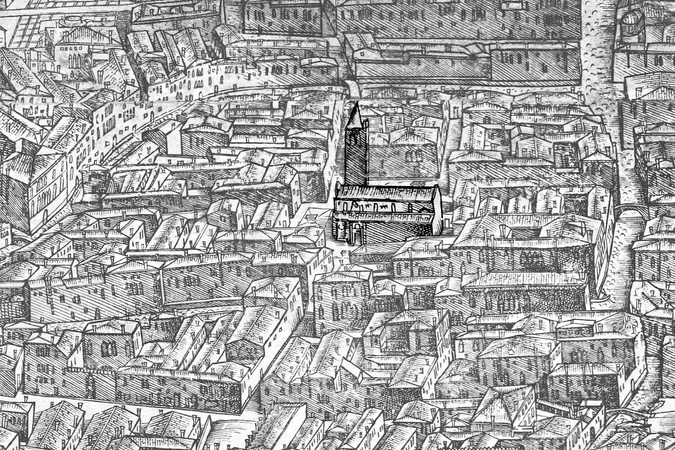
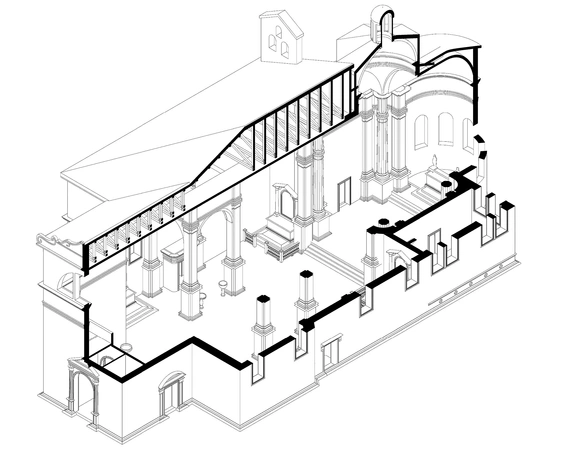
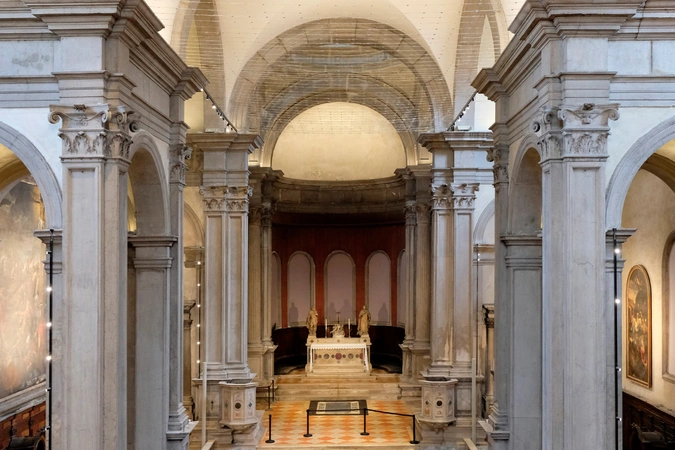
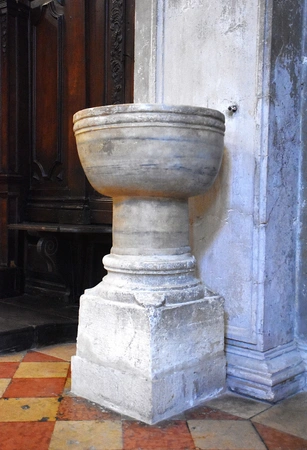
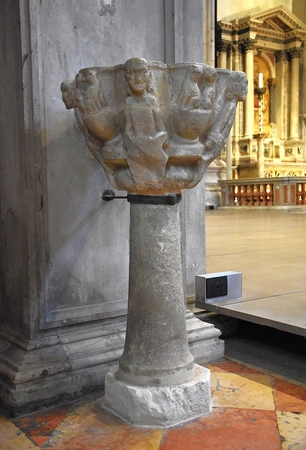
The church of San Fantin in Venice embodies the city’s architectural and historical evolution, with its origins in the High Middle Ages still uncertain. This article explores the church’s transformation through a multidisciplinary approach, combining digital modeling, material analysis, and archival research. Carlotta Zaramella reconstructs San Fantin’s architectural phases using a Building Information Modeling (BIM) model. Myriam Pilutti Namer analyzes the phenomenon of reused materials in Venice, with particular focus on the types of ancient marbles incorporated into the church’s fabric. Giulia A.B. Bordi investigates medieval material evidence and archival records of the baptismal font and the holy water stoup
Figures
Preview
Subjects:
Virtual Reality and 3D Modelling Cultural Resource Management
Download (PDF)Publishers:
CNR - Istituto di Scienze del Patrimonio Culturale
Edizioni All'Insegna del Giglio
This website uses only technical cookies strictly necessary for its proper functioning. It doesn't perform any profiling and doesn't use third party cookies of any kind.
Read our privacy policy for additional information.
By clicking 'OK' or closing this banner you acknowledge having read this information and accept the website's contents.