


Volumes / Journal / 37.1 / Auconi et al.

Assessing cultural heritage artifacts through quantitative methods. Insights from Corinthian Roman capitals

Andrea Auconi, Luigi Sperti, Guido Caldarelli, Myriam Pilutti Namer, Alessandro Codello

«Archeologia e Calcolatori» 2026, 37.1, 277-294; doi: 10.19282/ac.37.1.2026.14

Abstract

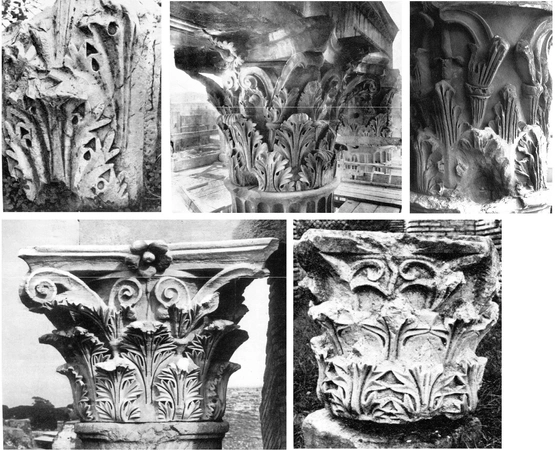
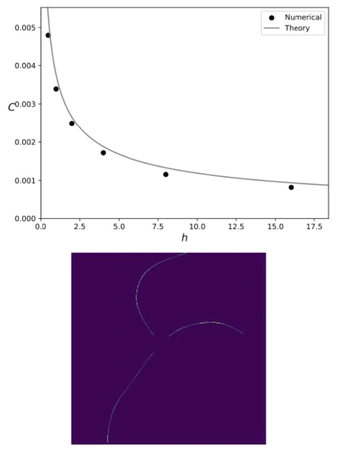
This article proposes a quantitative approach to the stylistic analysis of ancient Roman Corinthian capitals through computational image processing. The study focuses on the evolution of the canonical Corinthian capital produced in Rome and its related contexts between the late first century BCE and the fourth century CE, a period during which significant formal transformations affected the morphology of the acanthus leaves and the overall decorative system. While traditional archaeological analysis has identified several diagnostic features for classification and dating, these assessments have largely relied on the qualitative expertise of specialists. In this work we introduce a basic quantitative method to estimate the curvature of two-dimensional representations of capitals, such as archaeological drawings. The method extracts geometric information from the contours of decorative elements without requiring training datasets or complex machine-learning procedures. By analysing the sharpness and curvature of ornamental features, the approach provides a quantitative descriptor of stylistic change over time. The results demonstrate that this method can distinguish capitals belonging to different chronological phases and therefore has the potential to support archaeological classification, facilitate the study of large corpora of artifacts, and contribute to the development of computational tools for cultural heritage research and documentation.

Figures

Preview

Subjects:

Simulation AI Classification of archaeological finds

Download (PDF)

Publishers:

CNR - Istituto di Scienze del Patrimonio Culturale

Edizioni All'Insegna del Giglio