
Fiorini A. 2026, Munsell Soil Finder e PyWALL: strumenti per la documentazione cromatica e il rilievo dei paramenti murari in archeologia, «Archeologia e Calcolatori», 37.1, 255-276 (https://doi.org/10.19282/ac.37.1.2026.13)
Copy to clipboard Download: BibTeXMunsell Soil Finder e PyWALL: strumenti per la documentazione cromatica e il rilievo dei paramenti murari in archeologia
«Archeologia e Calcolatori» 2026, 37.1, 255-276; doi: 10.19282/ac.37.1.2026.13
Abstract
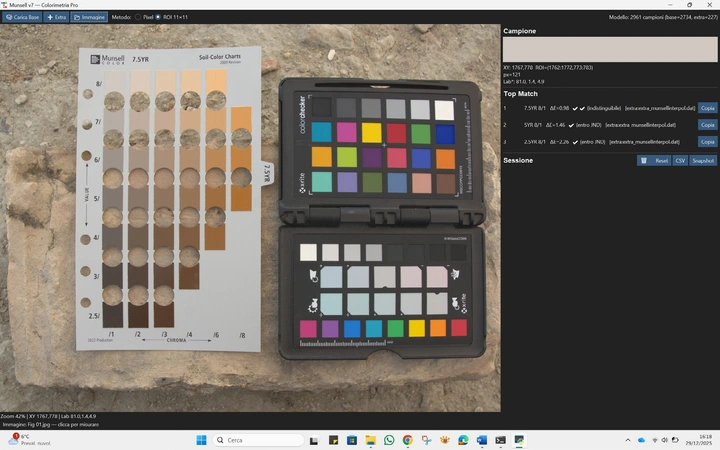
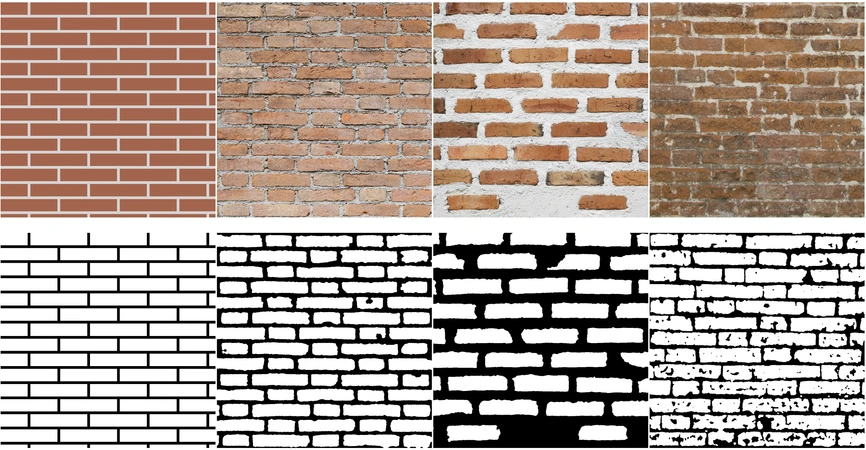
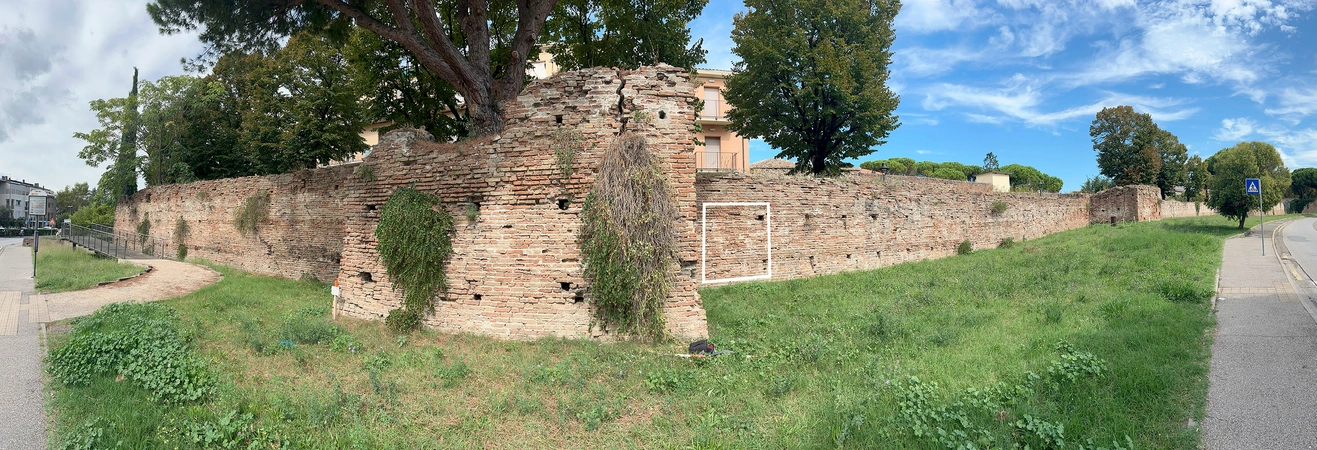
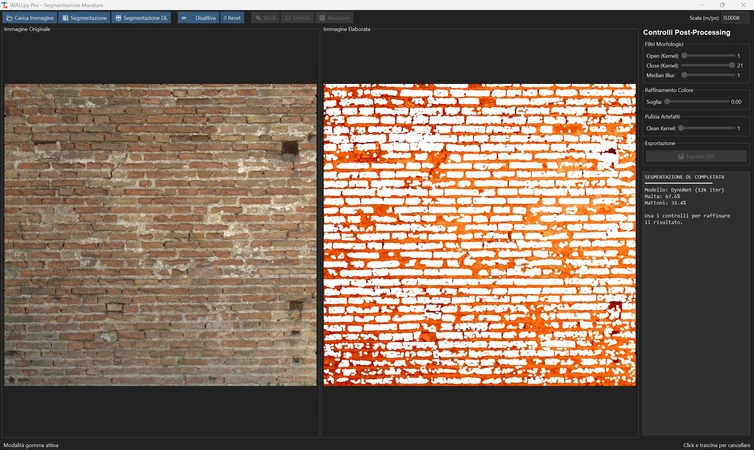
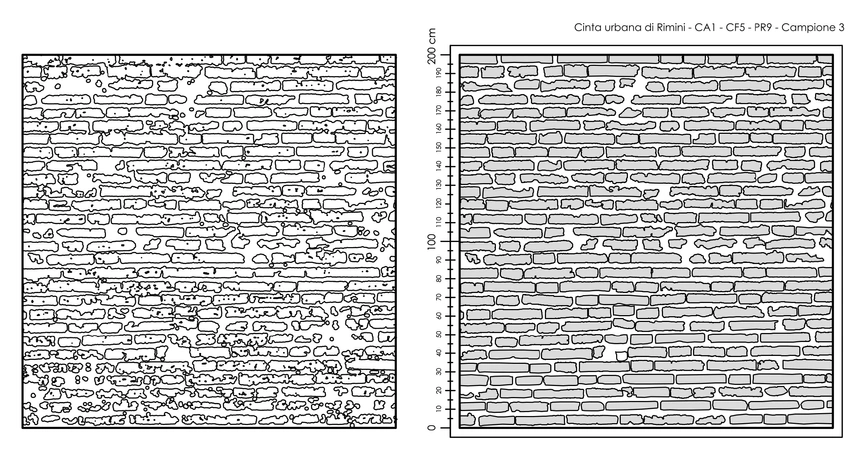
This paper presents two software applications for quantitative archaeological documentation: Munsell Soil Finder and PyWALL. Both tools were developed using AI-assisted natural language programming (Vibe Coding), demonstrating its viability for domain-specific archaeological software development. The two tools address recurrent operational bottlenecks: the standardization of color recording and time-intensive masonry documentation. Munsell Soil Finder maps pixel samples from calibrated photographs to Munsell (H V/C) notation via KD-tree nearest-neighbour search in CIELAB and ΔE2000 refinement, using 2734 reference samples plus interpolated values. PyWALL segments bricks and mortar in orthorectified images via K-Means clustering (Lab + edge/texture features) or a pre-trained DynUNet, extracts contours, and exports to DXF. Validation comprised: 1) chart tests with ColorChecker profiling (accuracy 63-100%, robustness ≥0.87); 2) human-versus-software and inter-observer comparisons (38.3% exact agreement with the software output; 28.9% among observers), highlighting the variability of visual assessment; 3) segmentation benchmarking (IoU 0.883-1.00; F1 0.938-1.00). A case study on Rimini’s medieval walls employs fuzzy c-means on combined chromatic and metric features to identify a consistent brick module (~27×12×5 cm), two clusters per brick orientation – separated primarily by CIELAB values rather than format, suggesting variability in clay composition or f iring conditions – and fragmentation rates of 26.92-41.14%.
Figures
Preview
Subjects:
Simulation AI Classification of archaeological finds
Download (PDF)Publishers:
CNR - Istituto di Scienze del Patrimonio Culturale
Edizioni All'Insegna del Giglio
This website uses only technical cookies strictly necessary for its proper functioning. It doesn't perform any profiling and doesn't use third party cookies of any kind.
Read our privacy policy for additional information.
By clicking 'OK' or closing this banner you acknowledge having read this information and accept the website's contents.