

Bruseker G., Christian K., Nenova D. 2025, The Semantic Census: a new expression of The Census of Antique Works of Art and Architecture Known in the Renaissance as open data, in M. Pilutti Namer, A. Auconi, G. A. Bordi (eds.), Networks and Quantitative Methods in Archaeology and Art History: Essays from the Venice Symposium (5-6 December 2024), «Archeologia e Calcolatori», 36.2, 39-54 (https://doi.org/10.19282/ac.36.2.2025.05)
Copy to clipboard Download: BibTeXThe Semantic Census: a new expression of The Census of Antique Works of Art and Architecture Known in the Renaissance as open data
George Bruseker, Kathleen Christian, Denitsa Nenova
«Archeologia e Calcolatori» 2025, 36.2, 39-54; doi: 10.19282/ac.36.2.2025.05
Abstract
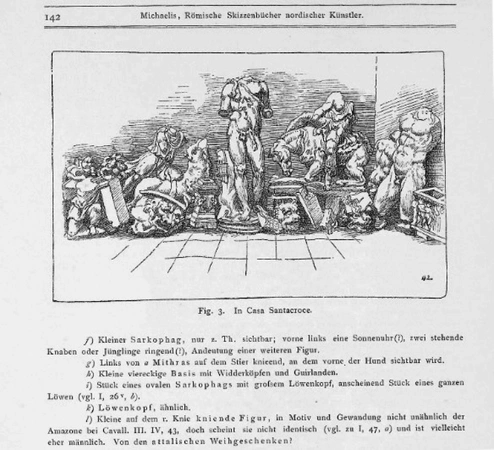
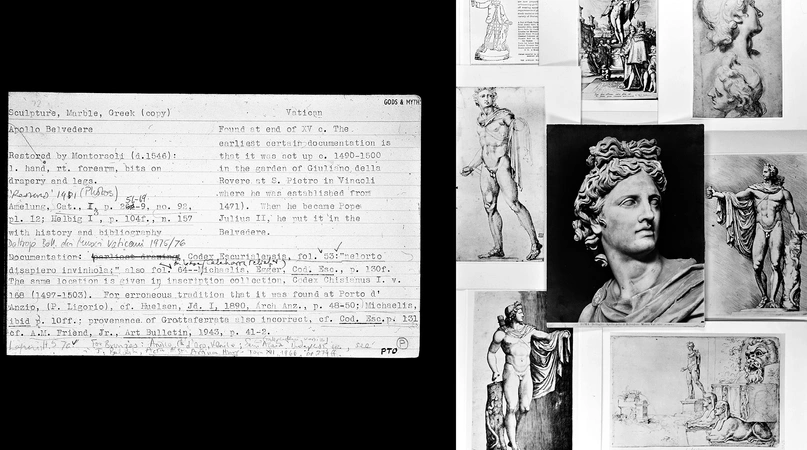
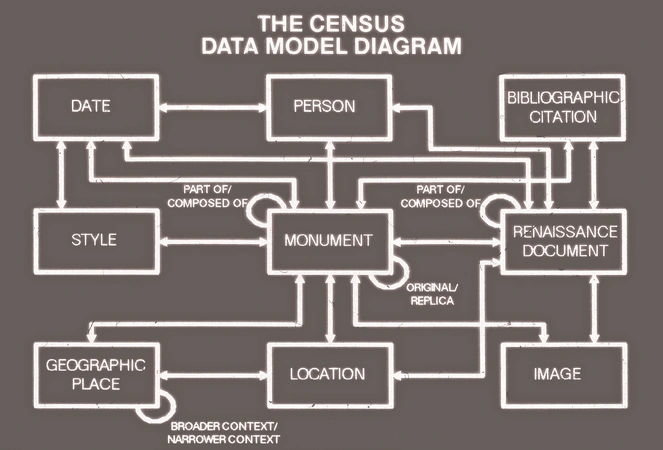
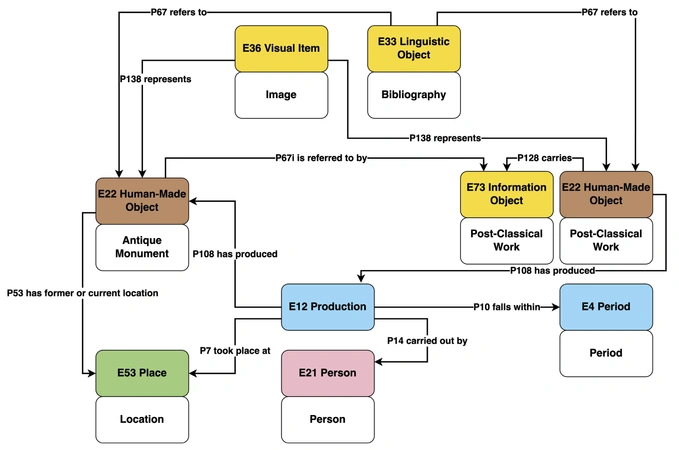
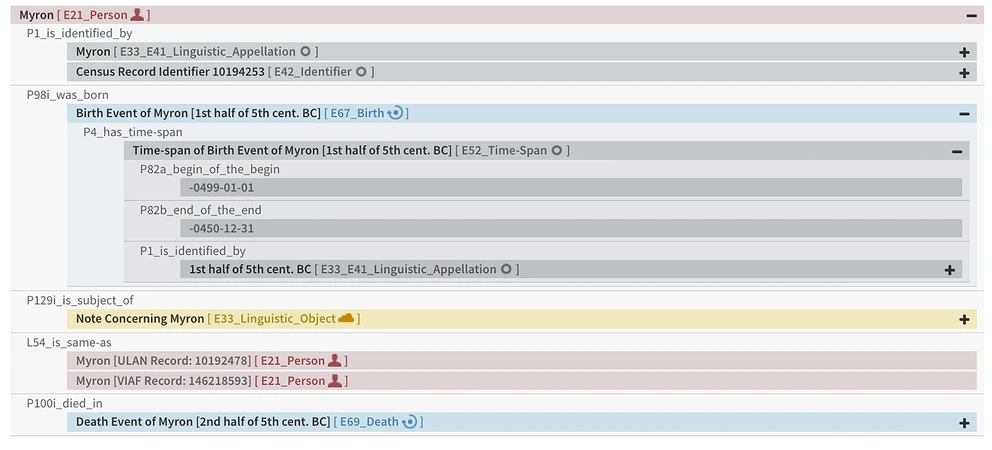
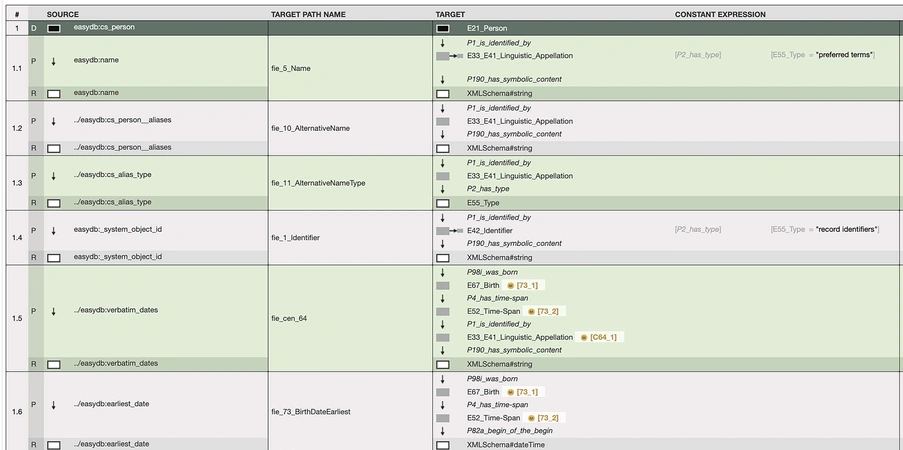
The Census of Antique Works of Art and Architecture Known in the Renaissance, established in 1946, is a research project that traces the knowledge and reception of antiquities known during the Renaissance by linking them with Early Modern visual and textual records. It has over its long history evolved from an analog system, to one of the earliest digital art history projects, to an online database (https://database.census.de). Recent innovations (2021–2023) have transformed the database into semantic data using the CIDOC-CRM ontology, aligning it with FAIR principles and encouraging broader engagement with the Census’s rigorously-researched dataset. The modeling process involved creating eight Semantic Census models, supported by extensive documentation. The semantic transformation of Census data used the X3ML language and 3M tool for mapping and verification, ensuring consistency and compatibility with other datasets, such as those in the CORDH network. Queries can now be performed using SPARQL, with documented query examples to guide researchers unfamiliar with semantic data. The Semantic Census models have the ability to facilitate new research purposes for Census data, not only in the fields of art history and archaeology, but also beyond the project’s original scope.
Figures
Preview
References
Click on the reference to open it in Bi.Di.Ar. (Bibliography of Digital Archaeology)
- Antoniou G., Van Harmelen F. 2004, A Semantic Web Primer, Cambridge (MA), MIT Press.
- Bartsch T. 2008, “Distinctae per locos schedulae non agglutinatae” – Das Census-Datenmodell und seine Vorgänger, «Pegasus», 10, 223-260.
- Bekiari C., Bruseker G., Doerr M., Ore C.-E., Stead S., Velios A. 2021, Definition of the CIDOC Conceptual Reference Model v7.1.1 Model, CIDOC CRM Special Interest Group (https://doi.org/10.26225/FDZH-X261).
- Berners-Lee T., Hendler J., Lassila O. 2001, The Semantic Web, «Scientific American», 284, 5, 34-43 (https://doi.org/10.1038/scientificamerican0501-34).
- Bizer C., Heath T., Berners-Lee T. 2023, Linked Data. The story so far, in Linking the World’s Information: Essays on Tim Berners-Lee’s Invention of the World Wide Web, Association for Computing Machinery, 115-143 (https://doi.org/10.1145/3591366.3591378).
- Bober P.P., Rubinstein R. 1986, Renaissance Artists & Antique Sculpture: A Handbook of Sources, London-Oxford, Harvey Miller Publishers-Oxford University.
- Bruseker G., Fielding M., Nenova D., Haensli T. 2025, The semantic reference data modelling method: Creating understandable, reusable and sustainable semantic data models, «Journal of Open Humanities Data», 11 (https://doi.org/10.5334/johd.282).
- Carballo-Garcia A., Boté-Vericad J.-J. 2022, Fair data: History and present context, «Central European Journal of Educational Research», 4, 2 (https://doi.org/10.37441/cejer/2022/4/2/11379).
- Christian K. 2024, Semantic data of the Census of Antique Works of Art and Architecture Known in the Renaissance, 1946-05-13 to 2024-10-01 [dataset], Humboldt-Universität zu Berlin e-doc Server (https://doi.org/10.18452/29556).
- Guarino N. 1997, Understanding, building and using ontologies, «International Journal of Human and Computer Studies», 46, 2, 293-310 (https://doi.org/10.1006/ijhc.1996.0091).
- Lu C. 2023, Tracing the Footsteps of Alfred Scharf: The Early History of the Census and the “Republic of Pictures”. Verso. A Discussion Forum of the Census. Available at https://verso.hypotheses.org/3749.
- Mantilla J.C.G. 2023, Sacsayhuaman in Early Modernity: The Invention of New Ancient Edifices. Verso. A Discussion Forum of the Census. Available at https://verso.hypotheses.org/2911.
- Marketakis Y., Minadakis N., Kondylakis H., Konsolaki K., Samaritakis G., Theodoridou M., Flouris G., Doerr M. 2017, X3ML Mapping framework for information integration in Cultural Heritage and beyond, «International Journal on Digital Libraries», 18, 301-319 (https://doi.org/10.1007/s00799-016-0179-1).
- Michaelis A. 1891, Römische Skizzenbücher Marten van Heemskercks und anderer nordischer Künstler des XVI. Jahrhunderts, «Jahrbuch des Kaiserlich Deutschen Archäologischen Instituts», 6, 125-172.
- Miller J.L. 2024, Forgery, Imitation, Emulation: The Creation of Antiquity in the Renaissance. Verso. A Discussion Forum of the Census. Available at https://verso.hypotheses.org/5360.
- Nenova D., Bruseker G. 2023, Deliverable 2-Documented Semantic Data Model (https://doi.org/10.5281/zenodo.7684280).
- Nenova D., Bruseker G. 2023, Deliverable 5-Research Questions Implementation (Version 1) [Dataset], Zenodo (https://doi.org/10.5281/zenodo.7684331).
- Nenova D., Bruseker G. 2023, Semantic Census RDF Data (Version 1) [dataset], Zenodo (https://doi.org/10.5281/zenodo.7684301).
- Nenova D., Bruseker G. 2023, Semantic Census X3ML Mappings (Version 1) [dataset], Zenodo (https://doi.org/10.5281/zenodo.7684325).
- Nenova D., Bruseker G. 2023, Sustainable Semantic Data Management Pipeline Documentation. Semantic Census Deliverable 4: An ETL Pipeline from easydb to RDF; Semantic Census Deliverable 6: Semantic Data Transformation and Testing (https://doi.org/10.5281/zenodo.7684257).
- Nesselrath A. 1993, The Census of antique works of art and architecture known to the Renaissance, in J. Boardman, D. Kurtz (eds.), International Conference on Data and Image Processing in Classical Archaeology (Ravello, 3-4 April 1992), «Archeologia e Calcolatori», 4, 237-241 (https://www.archcalc.cnr.it/journal/articles/67).
- Oldman D. 2021, Digital research, the legacy of form and structure and the ResearchSpace system, in K. Golub, Y.-H. Liu (eds.), Information and Knowledge Organisation in Digital Humanities, New York, Routledge, 131-153 (https://doi.org/10.4324/9781003131816-7).
- Pray Bober P. 1989, The Census of Antiquities known to the Renaissance: Retrospective and Prospective, in S.D. Squarzina (ed.), Roma centro ideale della cultura dell’antico nei secoli XV e XVI, Milano, Electa, 372-381.
- Sawatzki C. 2023, Winged Horses and Snail-shaped Dolphins: A Broader Perspective on Drawings after the Antique in the Census Database. Verso. A Discussion Forum of the Census. Available at https://verso.hypotheses.org/1785.
- Schich M. 2009, Rezeption und Tradierung als komplexes Netzwerk. Der CENSUS und visuelle Dokumente zu den Thermen in Rom, PhD Diss, Munich, Biering & Brinkmann.
- Settis S. (ed.) 1984, Memoria dell’antico nell’arte italiana, I-III, Torino, Einaudi.
- Trapp J.B. 1999, The Census: Its past, its present and its future, «Pegasus», 1, 11-21.
Browse
Subjects
Database Classification of archaeological finds
Download (PDF)Publishers
CNR - Istituto di Scienze del Patrimonio Culturale
Edizioni All'Insegna del Giglio
This website uses only technical cookies strictly necessary for its proper functioning. It doesn't perform any profiling and doesn't use third party cookies of any kind.
Read our privacy policy for additional information.
By clicking 'OK' or closing this banner you acknowledge having read this information and accept the website's contents.