
Volumes / Supplements / 15 / Campana, Liverani

Roselle: territorio e città, sintesi storica

Stefano Campana, Paolo Liverani

«Archeologia e Calcolatori» 2026, Supplemento 15, 299-323; doi: 10.19282/acs.15.2026.19

Abstract

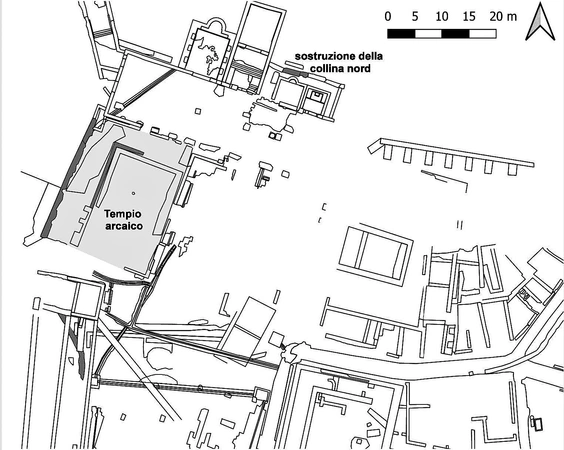
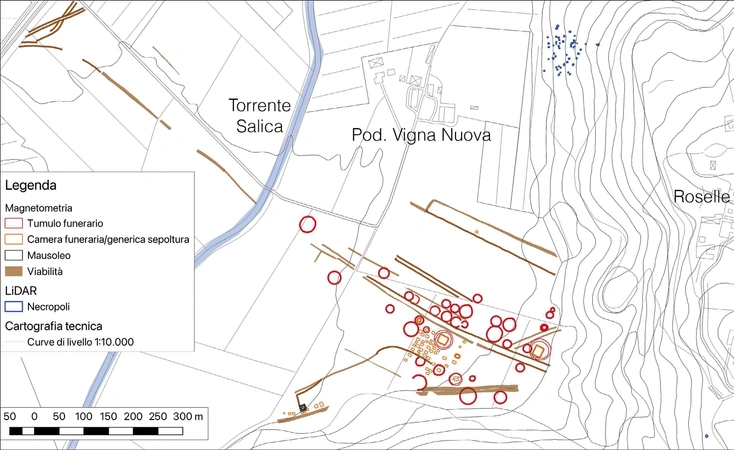
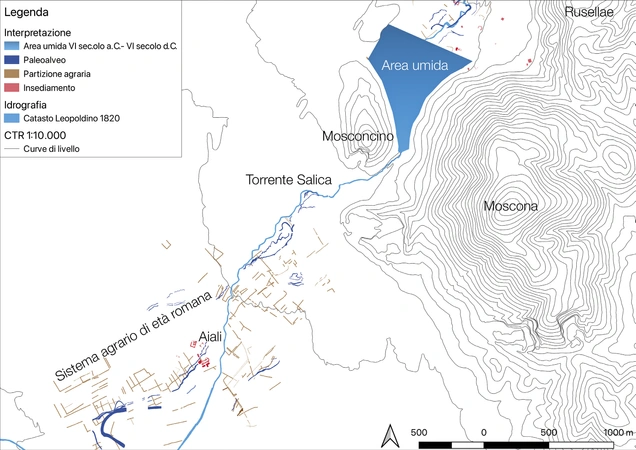
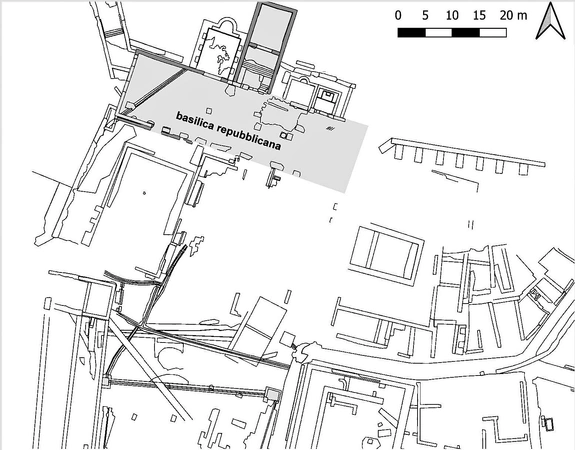
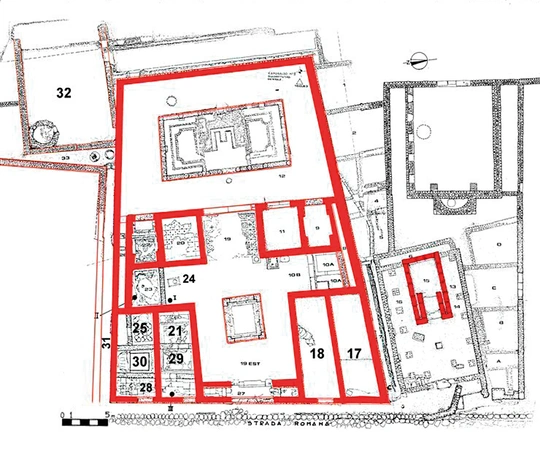
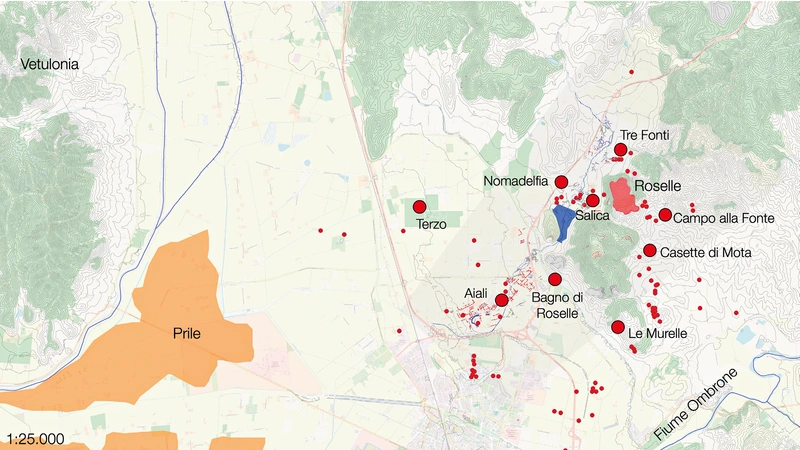
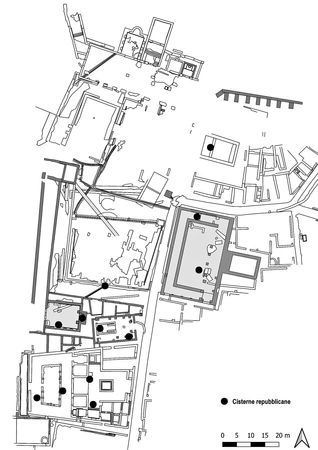
The paper presents a historical and topographical synthesis of the city of Roselle and its surrounding territory, integrating results from recent research with earlier scholarship. It emphasizes the methodological challenges arising from the different investigative approaches applied to urban and rural contexts – excavation in the city and surface survey in the countryside – and highlights the need for their integration to reconstruct coherent historical narratives. From the Archaic period, Roselle emerges as a structured landscape characterized by organized settlement patterns, funerary areas, and a significant wetland system that played a key ecological and economic role over many centuries. During the Late Republican period, the forum area underwent important transformations, including the construction of early basilica-likestructures and elite residences, while the surrounding territory saw the gradual development of villa-based production systems. A major phase of urban reorganization occurred in the Augustan and Julio-Claudian periods, marked by monumentalisation of the forum, construction of public buildings, and increased investment in infrastructure such as water supply systems. This process continued through the Flavian and Trajanic-Hadrianic periods, reflecting sustained prosperity and local elite involvement in urban development. Overall, the study offers a long-term reconstruction of the interaction between city and territory, underlining Roselle’s evolution within broader socio-economic and environmental dynamics.

Figures

Preview

Subjects:

History of applications and research projects Survey and excavations

Download (PDF)

Publishers:

CNR - Istituto di Scienze del Patrimonio Culturale

Edizioni All'Insegna del Giglio