
Volumes / Supplements / 15 / Giorgi et al.

Suasa. Archeologia di una città adriatica tra scavo archeologico e indagini non invasive

Enrico Giorgi, Alessandro Campedelli, Giuseppe Guarino, Francesca Bindelli

«Archeologia e Calcolatori» 2026, Supplemento 15, 153-170; doi: 10.19282/acs.15.2026.10

Abstract

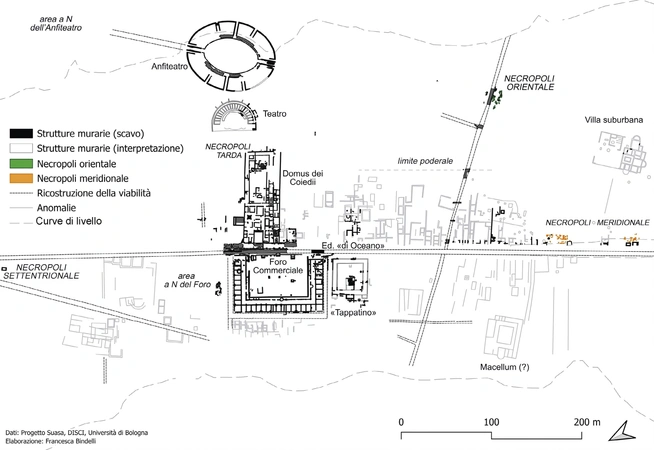
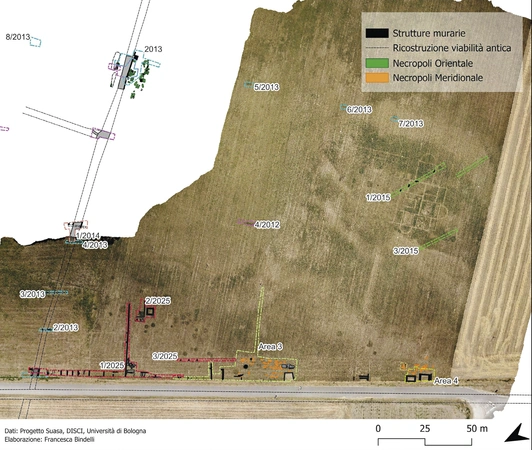
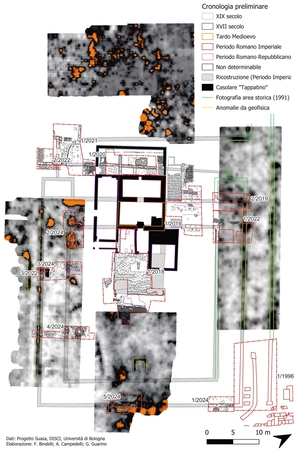
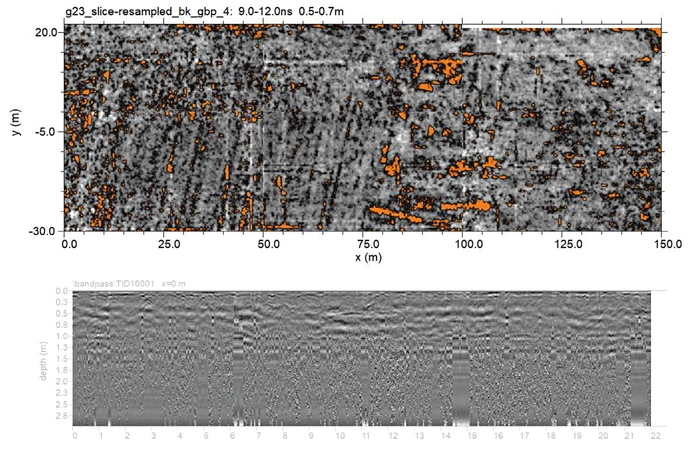
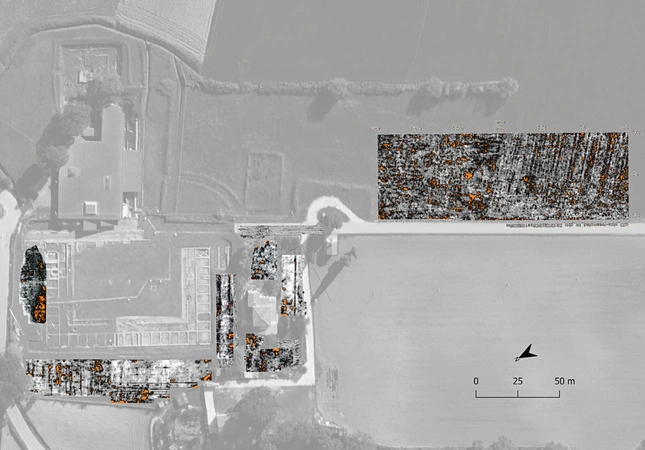
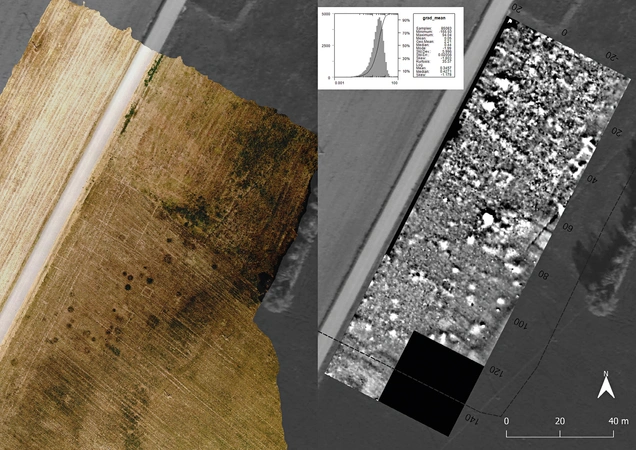
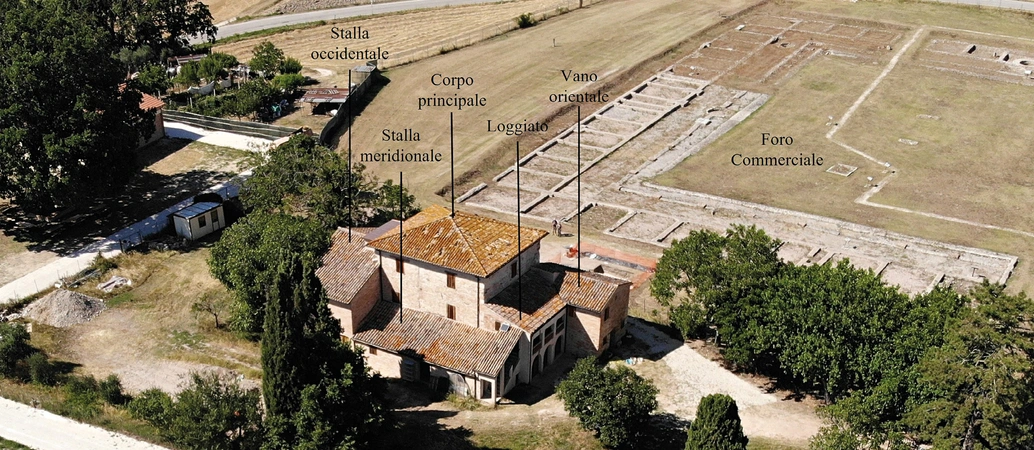
This paper presents the recent results of archaeological research conducted at Suasa as part of a long-term project led by the University of Bologna. It focuses on the methodological discussion of the combined use of remote and proximal sensing techniques and stratigraphic excavation in reconstructing urban layouts and their diachronic transformations. The research focused on two main areas: the central zone known as the ‘Tappatino’ and the southern and eastern margins of the ancient city. In the ‘Tappatino’ area, a combination of historical and recent aerial photography, geophysical prospection, stratigraphic excavation, building analysis, topographic surveys and 3D reconstruction revealed a multi-phase monumental complex. Integrated analysis of traces, architectural remains and digital documentation has clarified construction sequences and functional transformations within this central urban sector. Recent investigations along the urban margins, primarily guided by non-invasive data and only partially verified through excavation, are still in the early stages. Preliminary results suggest the presence of water management systems and areas that may correspond to productive quarters. However, no clear evidence of a continuous defensive circuit has emerged. Overall, this case study highlights the importance of an integrated methodological approach to investigating minor Roman towns.

Figures

Preview

Subjects:

Remote Sensing Survey and excavations

Download (PDF)

Publishers:

CNR - Istituto di Scienze del Patrimonio Culturale

Edizioni All'Insegna del Giglio