

Ghiglia G. 2025, L’IA per la generazione di immagini archeologiche, in S. Bertoldi, L. Luppino (eds.), Next-Gen Archaeology. Innovazioni e tradizioni tecnologiche per lo studio del passato. Atti delle Giornate di Studio “Archeologia e Nuove Tecnologie: dalla teoria ai protocolli esecutivi” (Siena, 25-27 ottobre 2023), «Archeologia e Calcolatori», Supplemento 13, 313-324 (https://doi.org/10.19282/acs.13.2025.22)
Copy to clipboard Download: BibTeXVolumes / Supplements / 13 / Ghiglia
L’IA per la generazione di immagini archeologiche
«Archeologia e Calcolatori» 2025, Supplemento 13, 313-324; doi: 10.19282/acs.13.2025.22
Abstract
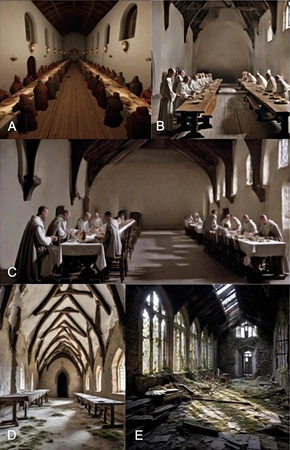
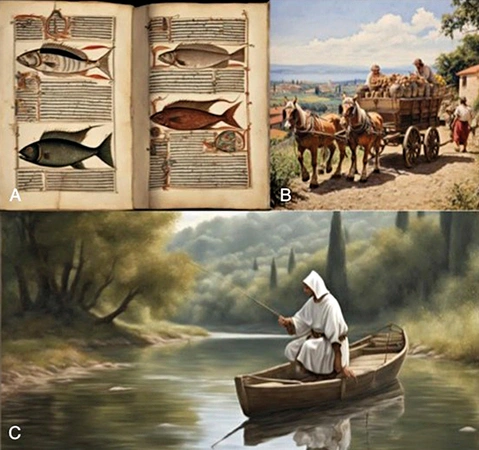
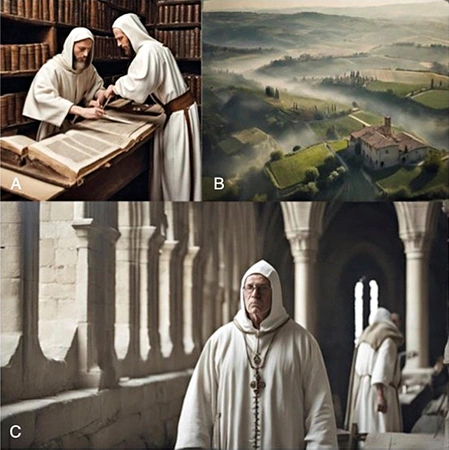
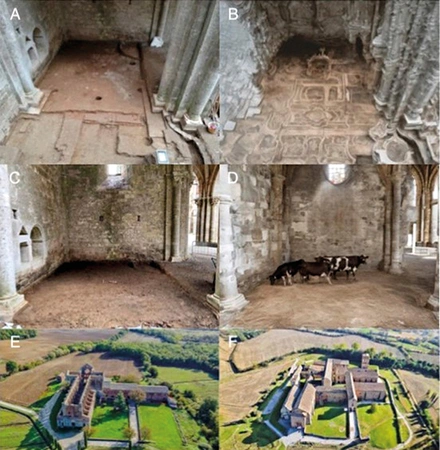
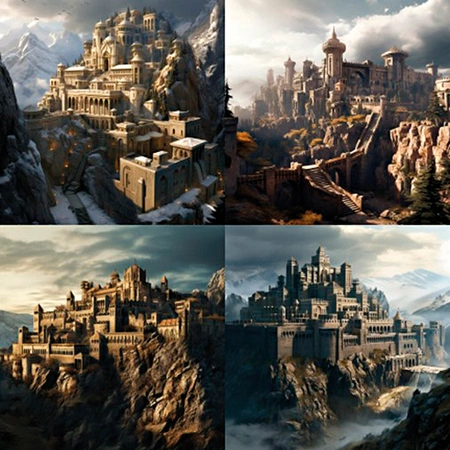
Artificial Intelligence (AI) has become an integral part of daily life, with applications expanding rapidly. This article focuses on AI’s ability to generate images for archeological purposes, delving into the technical aspects of image generation using deep learning and machine learning technologies. Midjourney and Playground AI, two popular web applications for image generation, are examined in detail, highlighting their functionality and interface differences. The study applies these tools to reconstruct scenarios from the Cistercian Abbey of San Galgano, assessing their accuracy and limitations. While AI-generated reconstructions offer rapid and cost-effective visualization, they often lack precision, especially in incorporating specific archaeological details. The article underscores the need for improved databases containing detailed architectural and archaeological elements to enhance AI-generated reconstructions’ accuracy and relevance.
Figures
Preview
References
Click on the reference to open it in Bi.Di.Ar. (Bibliography of Digital Archaeology)
- Argyrou A., Agapiou A. 2022, A review of Artificial Intelligence and remote sensing for archaeological research, «Remote Sensing», 14, 23, 6000 (https://doi.org/10.3390/rs14236000).
- Banh L., Strobel G. 2023, Generative artificial intelligence, «Electronic Markets», 33, 1, 62-79 (https://doi.org/10.1007/s12525-023-00680-1).
- Ben Romdhane H., Francis D., Cherif C., Pavlopoulos K., Ghedira H., Griffiths S. 2023, Detecting and predicting archaeological sites using remote sensing and Machine Learning – Application to the Saruq Al-Hadid Site, Dubai, UAE, «Geosciences», 13, 2, 1-34 (https://doi.org/10.3390/geosciences13060179).
- Bertoldi S., Nardini A. 2022, Lo scavo all’interno della chiesa di San Galgano (Chiusdino – SI): dalla fondazione ai riusi postmedievali, in M. Milanese (ed.), IX Congresso Nazionale di Archeologia Medievale (Cagliari 2022), Sesto Fiorentino (FI), All’Insegna del Giglio, 190-195.
- Elasri M., Elharrouss O., Al-Maadeed S., Tairi H. 2022, Image generation: A Review, «Neural Processing Letters», 1-39 (https://doi.org/10.1007/s11063-022-10777-x).
- Goodfellow I.J., Pouget-Abadie J., Mirza M., Xu B., Warde-Farley D., Ozair S., Courville A., Bengio Y. 2014, Generative Adversarial Nets, «arXiv», 1406.2261, 1-9.
- Menghini C., Palmas C. 2022, Il refettorio e la cucina di San Galgano (Chiusdino-SI): analisi sui materiali della campagna di scavo 2021, in M. Milanese (ed.), IX Congresso Nazionale di Archeologia Medievale (Cagliari 2022), Firenze, All’Insegna del Giglio, 170-175.
- Yang L., Zhang Z., Song Y., Hong S., Xu R., Zhao Y., Zhang W., Cui B., Yang M.-H. 2023, Diffusion Models: A comprehensive survey of methods and applications, «ACM Computing Surveys», 56, 4, 1-51 (https://doi.org/10.1145/3626235).
Browse
Subjects
Simulation AI Cultural Resource Management
Download (PDF)Publishers
CNR - Istituto di Scienze del Patrimonio Culturale
Edizioni All'Insegna del Giglio
Places mentioned in the article
This website uses only technical cookies strictly necessary for its proper functioning. It doesn't perform any profiling and doesn't use third party cookies of any kind.
Read our privacy policy for additional information.
By clicking 'OK' or closing this banner you acknowledge having read this information and accept the website's contents.